

An Organizational Communication Analysis of Unstable Universe's Zam Empire
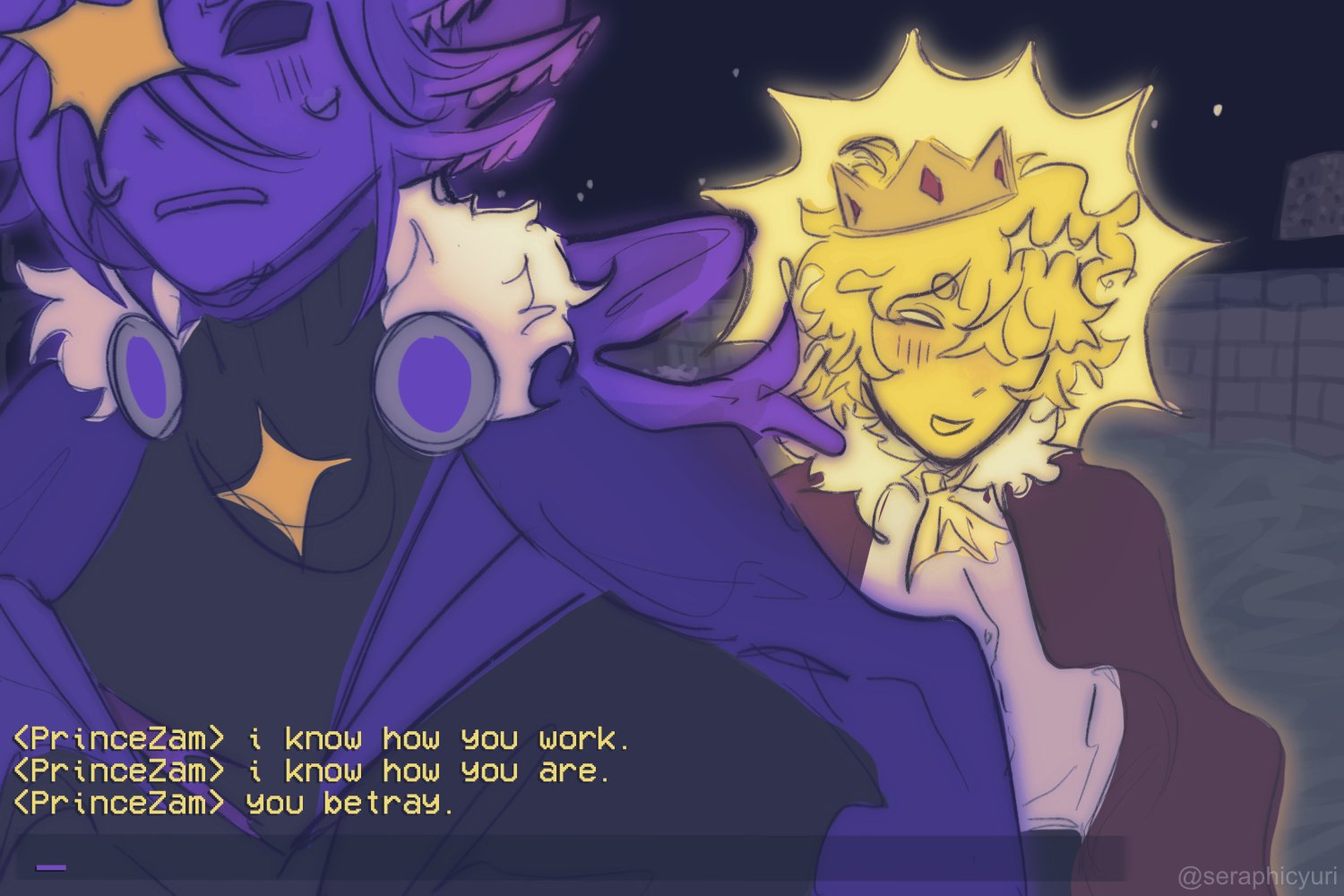
The Zam Empire of the Unstable SMP is a monarchy already established at the beginning of Unstable Universe season one. This empire is presided by its namesake and emperor, PrinceZam, and is known by the rest of the players of the SMP as having a particularly strong guard force, consisting of some of the strongest PvPers making up the playerbase of its time. The Zam Empire’s purpose is solely focused on expansion and control, demonstrated through the formation of colonies outside of its current territory, both at the server’s spawn and throughout the rest of the server, and how it treats other players or civilizations that pose a threat to it.
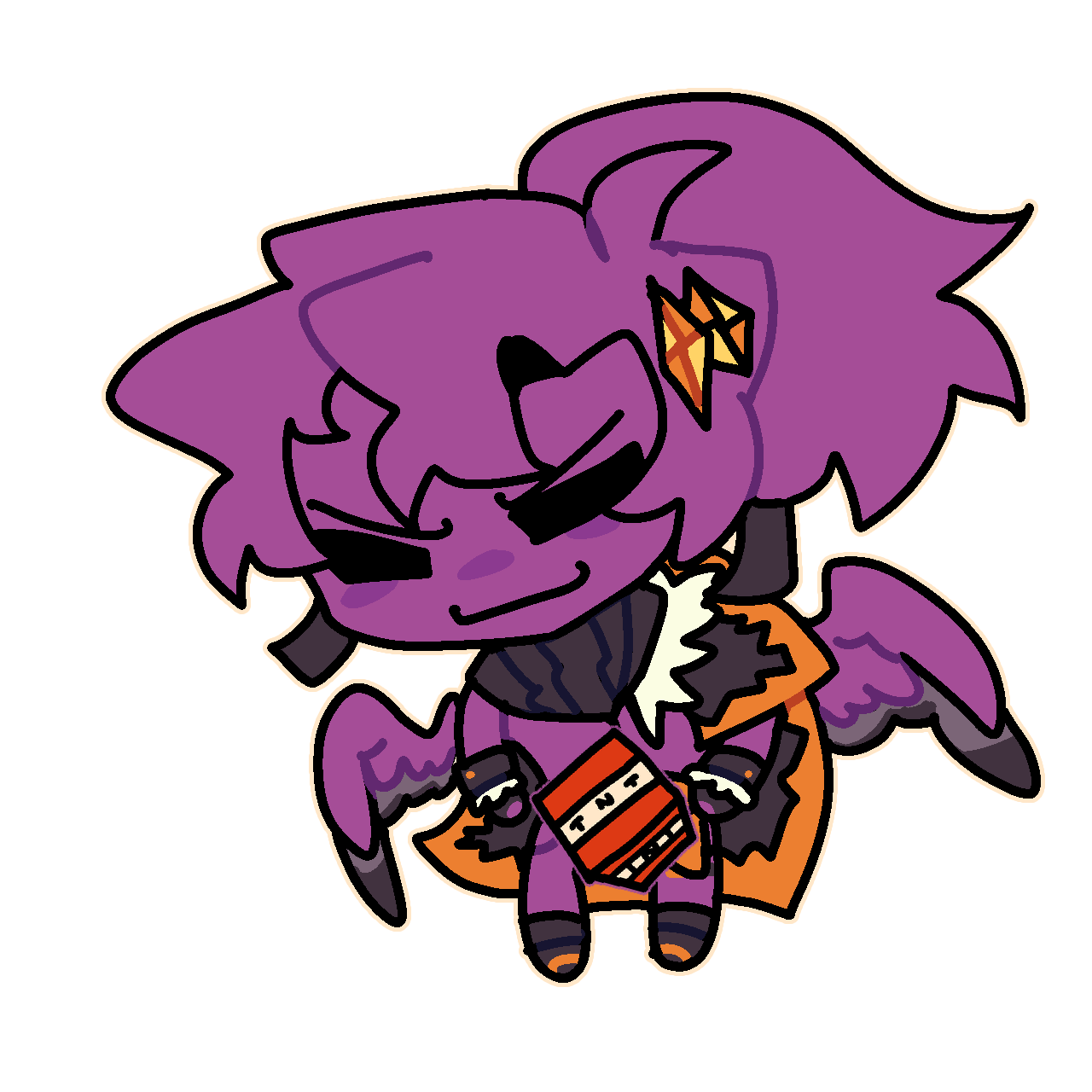
Unstable SMP’s Zam Empire operates under a strict hierarchical structure. As the emperor, PrinceZam is the sole decision-maker. His high-ranking guards, such as Pangi, Flamefrags, and Manepear, are next in the chain of command, as they carry out PrinceZam’s orders while having other, low-ranking guards following their command. These high-ranking guards are distinguished from their low-ranking counterparts through specific armor trims, as while low-ranking guards wear netherite armor with no armor trims, high-ranking Zam Empire guards wear netherite armor with gold eye armor trims (Wemmbu, 2024, July 29).
The Zam Empire of Unstable SMP makes use of two major theories of communication discussed within this course and its materials, those being Systems Theory and Leader-Member Exchange Theory. These theories of communication go hand in hand with the Zam Empire’s status as a monarchical empire, demonstrating systems of control, power dynamics, and how this empire plays a greater role in cultivating the Unstable SMP’s uniquely destructive yet creative environment.
According to Kramer and Bisel’s Organizational Communication: A Lifespan Approach, “Systems Theory explores the interaction between organizations and their environment and helps explain how changes or innovations enter organizations.” Systems Theory acknowledges that organizations must interact with their environment to survive, working in a cycle of bringing resources into the organization, working with those resources, and exporting resources back into the environment (Kramer & Bisel, 2017).
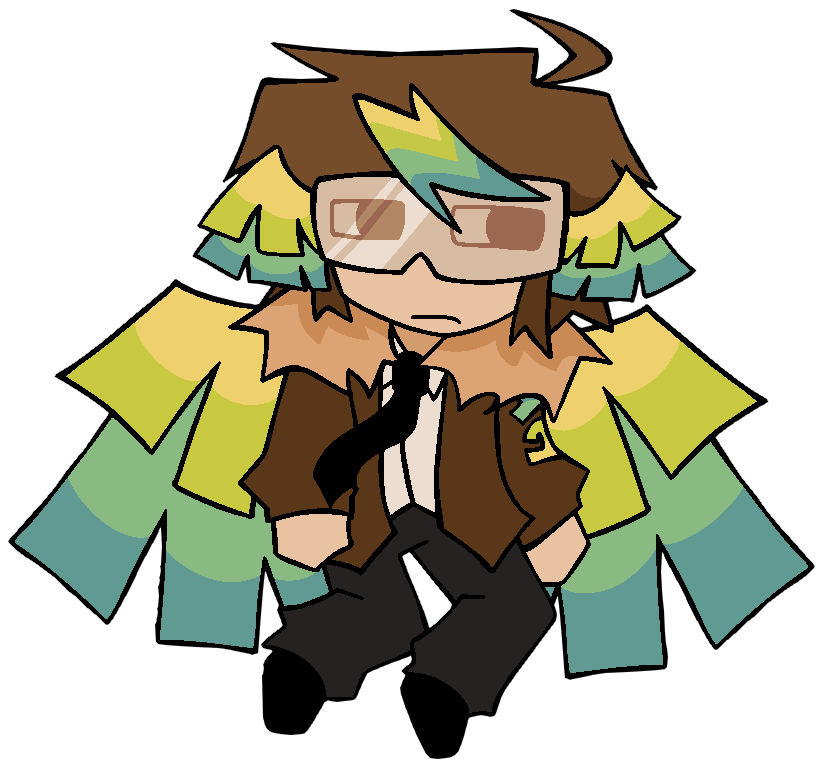
Within the Zam Empire, Systems Theory is most clearly demonstrated through the development of Wemmbu’s colony, overseen and partially sponsored by the Zam Empire. When discussing the plan to create this colony, the Zam Empire decided to provide Wemmbu, an ally not formally a part of the empire’s forces, with the supplies to build a settlement, a location of where to do so, and a task to protect the vault hidden beneath the land he was set to build on (Wemmbu, 2024, June 15). Wemmbu was expected to work within the resources he had been given and operate under the orders of PrinceZam, and, to the best of his ability, he did. In return, the Zam Empire could continue to expand across the server, have a second outpost to control, and have the opportunity to keep another one of their potential threats under surveillance.
Kramer and Bisel describe Leader-Member Exchange Theory in Organizational Communication: A Lifespan Approach as “how supervisors communicate and maintain different types of relationships with different groups of subordinates”. The textbook further breaks Leader-Member Exchange Theory into three different types of relationships, those being partnership relationships, overseer relationships, and middle-group relationships (Kramer & Bisel, 2017). Partnership relationships are close and personal, and often the supervisor is willing to consult with or give advice to the subordinate. Overseer relationships, on the other hand, are more formal and impersonal. The information shared between supervisor and subordinate is limited to necessary information and not much more. Lastly, middle-group relationships rest between the two extremes of partnership and overseer relationships. In this type of relationship, more than just necessary information is exchanged between supervisor and subordinate, but not as much as what would be shared in a partnership relationship.
The Zam Empire lacks partnership relationships between its emperor and subordinates. PrinceZam keeps his distance from those within his guards’ ranks, and when he begins to form partnership relationships, they often degrade at his own hands. It can be argued that one of the only partnership relationships that had begun to form within the Zam Empire, other than that between PrinceZam and Pangi, which did not have enough screentime to be fully understood, had been that between PrinceZam and Wemmbu, clearly demonstrating the degradation of partnership relationships within the Zam Empire. While the relationships between PrinceZam and his guards all fall into the category of overseer relationships, the relationships between high- and low-ranking guards could be classified as mostly middle-group relationships, as while all of the guards are familiar and friendly with each other, there is still a very distinct division of power between them.
Furthermore, the relationships between supervisor, or in the case of the Zam Empire, emperor, and subordinate can fall into the category of abusive supervision. According to Seo, Park, and Han’s The Ways to Avoid Abusive Supervision: The Moderating Effects of the Characteristics of Supervisors and Subordinates on Abusive Supervision, “Abusive supervision is conceptualized as “subordinates” perceptions of the extent to which supervisors engage in the sustained display of hostile verbal and nonverbal behaviors, excluding physical contact” (Seo, Park, & Han, 2025). Just as the Zam Empire is hostile to players outside of its ranks, it can also be internally hostile, as proven through the existence of traitors such as Manepear, certain dialogues between the high-ranking guards regarding their emperor’s character, and the way PrinceZam treats Wemmbu during his time working under the empire. As discussed in Seo, Park, and Han’s study, the positive relationship between supervisors’ authoritarianism and abusive supervision is enhanced when subordinates are highly agreeable and engage in more resistant behaviors with constructive feedback (Seo, Park, & Han, 2025). This study also mentions that as a result of subordinates’ personality types, authoritarian supervisors choose a “punching bag” within the workplace, which is clearly demonstrated through PrinceZam’s treatment of Wemmbu throughout season one.
When examining the internal communication dynamics of Unstable SMP’s Zam Empire regarding leadership communication style, it is clear that PrinceZam manages his subordinates through authority compliance management. His concerns are focused on getting the job done, and not on building connections amongst his subordinates.
When analyzing superior-subordinate interactions and comparing them with peer interactions within the Zam Empire, there is a strong contrast that can be found in the way PrinceZam interacts with his subordinates compared to the way high-ranking guards such as Flamefrags or Manepear interact with their subordinates. While PrinceZam gives orders with the expectation of his guards to follow and carry them out without complaint or thought, high- and low-ranking guards can interact with each other casually, without much forethought on power dynamics. As demonstrated in Wemmbu’s Why I Destroyed the Unstable SMP, PrinceZam’s guards are held to a high standard of professionalism, and it is seen as a challenge of his authority and disrespectful to not treat him with high regard or to be acting serious when at his side (Wemmbu, 2024, July 8). This is a common push and pull dynamic between PrinceZam and his guards.
Internal communication dynamics regarding team collaboration and information flow are demonstrated in two major ways. Firstly, if the viewer is to interpret Wemmbu and Eggchan as members of the Zam Empire while the colony is being developed, use of technology, such as in-game voice chat, can be demonstrative of team collaboration and communication, albeit within a rogue faction, and how fast information can be shared amongst allies. In a similar vein of team communication within the Zam Empire used specifically for dissent, there is a critical lack of information between high-ranking guards and PrinceZam. Despite his status as a high-ranking guard, Manepear is able to work behind both PrinceZam and the rest of the Zam Empire guards’ backs, assisting Wemmbu in his resistance (Wemmbu, 2024, July 8).
The only example of team onboarding and assimilation regarding the Zam Empire the viewers of Unstable Universe are given is the critical failure of the development of the colony Wemmbu is tasked with creating. During this, PrinceZam operates under the guise of onboarding and assimilation to weaken, and later attempt to kill, Wemmbu. PrinceZam would drain Wemmbu of necessary resources and leave him in uninhabited nature alone to build this colony, and would send one of his best guards, Flamefrags, after him under the excuse that Flamefrags had betrayed the empire and was trying to break into the vault Wemmbu was protecting against PrinceZam’s will. To keep this story straight, PrinceZam would occasionally send guards to Wemmbu’s colony to “check up on him” or keep tabs on his condition. This occurrence also demonstrates the lack of communication between PrinceZam and the rest of the Zam Empire guards, as not all of the empire’s guards were aware of the situation at hand and some fully believed that Flamefrags had betrayed them (Wemmbu, 2024, June 15).
The Zam Empire puts up a collective front, but fails at both internal and external communication. It is often hostile to those not within its ranks. Yesterday’s ally can be tomorrow’s enemy, as demonstrated with Wemmbu during the development and deterioration of the colony under his supervision. This is also demonstrated through PrinceZam’s personal ties to Clownpierce, a third-party assassin and mercenary hired to kill another one of PrinceZam’s enemies, ParrotX2, only to later be responsible for imprisoning both PrinceZam and Wemmbu (2024, July 29).
There is no other digital platform or technology that the Zam Empire seems to utilize other than Discord. Discord is mentioned to be used amongst the Zam Empire members to get in contact with PrinceZam, particularly by Eggchan, as he tries to ask PrinceZam for more materials and support for Wemmbu’s colony, only to get brushed off (Wemmbu, 2024, June 15). It is safe to assume that this would also be how other members of the Zam Empire would resort to getting into contact with PrinceZam if not through in-game chat or in-game voice chat. These technological limitations severely hinder the external communication the Zam Empire could have benefitted from.
The Zam Empire is depicted as one of Unstable Universe’s first antagonistic factions, and therefore it fails to operate ethically, both in communication and direct actions. For example, the Zam Empire does not hesitate to use sensitive or confidential information to their own advantage, either by using illegally obtained duplicated items, or by taking advantage of weaker players and using them as hostages. One example of this is the Zam Empire taking Eggchan hostage, hoping to use the life of his best friend as leverage over Wemmbu (Wemmbu, 2024, July 29). While these actions are acknowledged as antagonistic and not right, there is little resistance both within and outside of the Zam Empire.
The guard force of the Zam Empire is diverse in race, nationality, and PvP styles, although it is primarily made up of men. There is only one female high-ranking guard. The lack of diversity when it comes to gender within the Zam Empire’s guard force is completely overlooked and never addressed, though this is most likely the fault of the medium itself instead of intentionally done so within the story of Unstable Universe to depict the Zam Empire as holding such views. Unstable Universe as a whole is a product of its environment and severely lacks diverse gender representation.
The Zam Empire’s internal communication is much stronger than any of its external communication. It is an empire that struggles to not respond with hostility to any players that are not within its ranks. PrinceZam, and subsequently the Zam Empire, actively regards players that cannot hold their own against a high-ranking guard as weak, and views weakness as something to be looked down upon, as demonstrated throughout the episodes focusing on the development and deterioration of Wemmbu’s colony. A lot of the issues within the Zam Empire are entirely overlooked and unspoken simply due to the leadership style. High-ranking and low-ranking guards alike are both unlikely to go against PrinceZam in any form, and those not within the empire’s ranks lack the manpower to challenge PrinceZam’s rule.
There are three aspects of the Zam Empire that could benefit from improvement. The first aspect that must be addressed within the Zam Empire is its lack of gender diversity. As discussed within Kramer and Bisel’s Organizational Communication: A Lifespan Approach, lack of diversity can lead to categorization and unwanted expectations being placed on the non-majority individual to represent the viewpoints of an entire group (Kramer & Bisel, 2017). By working to create a more diverse guard force, the Zam Empire may begin to appear less unapproachable.
Similarly, the Zam Empire can begin to fix its hostile reputation through developing more transparency and improving communication between subordinates, superiors, and players outside of the Zam Empire. By improving both internal and external communication, the Zam Empire can become the united front it tries to present itself as. This can be achieved by PrinceZam following in the footsteps of his high- and low-ranking guards, foregoing overseer relationships and beginning to foster more middle-group relationships.
Finally, the third aspect of the Zam Empire that could be improved to enhance communication effectiveness would be the active avoidance of abusive supervision. While this is something that PrinceZam currently heavily relies on to control his guards, it is not the only way to ensure his subordinates listen to him. As discussed in Seo, Park, and Han’s The Ways to Avoid Abusive Supervision: The Moderating Effects of the Characteristics of Supervisors and Subordinates on Abusive Supervision, a superior cultivating mindfulness traits to effectively deal with negative situations the organization may face and maintaining clear and unbiased communication with subordinates can both serve as preventative measures against developing abusive supervision (Seo, Park, & Han, 2025).
Works Cited
Kramer, M. W., & Bisel, R. S. (2017). Organizational communication: A lifespan approach. Oxford University Press.
Seo, J., Park, H., & Han, J.-W. (2025). The ways to avoid abusive supervision: the moderating effects of the characteristics of supervisors and subordinates on abusive supervision. Journal of Social Psychology, 165(1), 1–20.
Thompson, P.-M. M., Glasø, L., Matthiesen, S. B., Farstad, C. W., & Haakonsen, J. M. F. (2024). Attachment styles and leader–member exchange: Investigating the principle of attachment-system activation. Psychology of Leaders and Leadership, 27(2), 159–182.
Wemmbu (2024, June 15). I Created Minecraft’s Greatest Civilization. YouTube, https://youtu.be/wbTIN42an0o?si=Rcl6AYVqnLMxo5RG
Wemmbu (2024, July 8). Why I Destroyed the Unstable SMP. YouTube, https://youtu.be/qc8ZF2KyeQ?si=U9N5QEX0Na8Ccg6G
Wemmbu (2024, July 29). Unstable SMP: The PrinceZam Empire War. YouTube, https://youtu.be/3N712OoF_FY?si=K6VmcyWPc3OqAagy